Precision welding techniques play an essential role in enhancing the quality and accuracy of design work. By ensuring seamless joints and minimizing thermal distortion, these methods help maintain the intended dimensions of components. This precision not only reduces material waste but also minimizes the need for rework, resulting in superior durability. Understanding the specific benefits and applications of these techniques can greatly impact your project’s outcome. So, what should you consider when selecting the right method?
Key Takeaways
- Precision welding creates seamless and uniform joints, enhancing structural integrity and reducing weak points in designs.
- The techniques minimize thermal distortion, maintaining intended dimensions and alignment for accurate design specifications.
- Tighter tolerances achieved through precision welding reduce material waste and rework, improving overall product quality.
- Enhanced durability from precision welding leads to greater customer satisfaction and longer-lasting products.
- Compatibility with other components is improved, ensuring better functionality and performance in complex designs.
What Are Precision Welding Techniques and Why Do They Matter?
When you consider the intricacies of modern manufacturing, precision welding techniques emerge as essential tools that considerably enhance quality and accuracy in design work. These techniques encompass methods like laser welding, TIG welding, and MIG welding, each offering specific advantages tailored to various materials and applications. By utilizing precision welding techniques, you achieve tight tolerances and reduced thermal distortion, which are critical in high-stakes environments such as aerospace and automotive industries. Additionally, these methods enable you to create cleaner, stronger joints that contribute to the overall integrity of your designs. As you incorporate precision welding into your processes, you foster a shared commitment to excellence, ensuring your work not only meets but exceeds industry standards, fostering a sense of belonging within the manufacturing community.
How Precision Welding Techniques Benefit Manufacturing
As you implement precision welding techniques in your manufacturing processes, you’ll quickly notice significant improvements in both efficiency and product quality. These techniques allow for tighter tolerances, reducing material waste and rework, which ultimately lowers costs. You’ll find that the consistency of weld quality enhances the durability of your products, leading to greater customer satisfaction. The ability to control heat input minimizes distortion, ensuring your components fit together seamlessly. In addition, integrating advanced automation in precision welding increases production speed, allowing you to meet market demands swiftly. As you embrace these techniques, you’ll not only strengthen your manufacturing capabilities but also foster a culture of excellence and precision in your team, creating a sense of belonging and shared achievement.
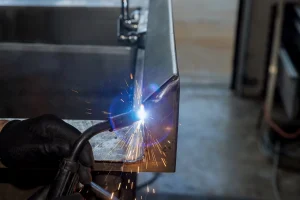
Why Do Precision Welding Techniques Matter for Design Accuracy?
How essential are precision welding techniques in achieving design accuracy? These techniques directly influence the structural integrity and aesthetic appeal of your projects. When you employ precision welding, you’re ensuring that joints are seamless and uniform, reducing the risk of weak points. This translates to better load distribution and longevity in your designs. Furthermore, precision welding techniques minimize distortion during the welding process, which is vital for maintaining the intended dimensions and alignment of components. By achieving tighter tolerances, you enhance compatibility with other parts, leading to improved overall functionality. Ultimately, precision welding techniques matter because they elevate the quality of your work, allowing you to deliver designs that not only meet but exceed expectations.
Applications of Precision Welding Techniques
Precision welding techniques find extensive applications across various industries, markedly enhancing both functionality and durability. In the automotive sector, these techniques guarantee structural integrity and improve safety by providing strong, reliable joins in frames and components. In aerospace, precision welding creates lightweight yet robust assemblies, essential for performance and fuel efficiency. For electronics, it allows for fine connections in circuit boards, enhancing device reliability. Additionally, the medical field benefits from precision welding in the fabrication of surgical instruments and implants, where accuracy is vital. By employing these techniques, you’re not only achieving superior quality but also extending product life, guaranteeing compliance with industry standards, and fostering innovation in design. Embracing precision welding means investing in excellence across your projects.
How to Choose the Right Precision Welding Technique for Your Project
Which factors should you consider when selecting the right precision welding technique for your project? First, assess the materials involved; different metals and alloys require specific techniques for ideal fusion. Next, consider the thickness of the materials—some methods excel in thin sheets, while others handle thicker sections better. You’ll also want to evaluate the project’s required precision level; techniques like laser welding provide superior accuracy for intricate designs. Additionally, think about the environment; certain methods are better suited for controlled conditions, while others thrive in less predictable settings. Finally, budget constraints can influence your choice, as some precision welding techniques come with higher operational costs. By weighing these factors, you’ll find the right precision welding technique tailored to your needs.
Conclusion
Incorporating precision welding techniques into your projects greatly enhances design quality and accuracy. These methods not only guarantee seamless joints and minimize thermal distortion, but they also reduce material waste and rework needs. By achieving tighter tolerances, you can create more durable and aesthetically pleasing products that meet your specifications. Ultimately, choosing the right precision welding technique not only elevates functionality but also boosts customer satisfaction, making it a crucial consideration in modern manufacturing.
You May Also Like To Read: